
Why Middle Eastern Incense Belongs in Every Modern Home
Why Middle Eastern Incense Belongs in Every Modern Home
The way a home smells is one of the most underestimated elements of interior design. In 2026, home fragrance has evolved from a simple luxury to an essential component of mindful living. Yet for most households in the West, the fragrance toolkit stops at candles and reed diffusers, both of which are relatively recent inventions. Middle Eastern incense, by contrast, draws on a tradition that is more than 5,000 years old, and its core ingredients, oud, bakhoor, and frankincense, are now among the most sought-after fragrance materials on the planet. The Western market has shown growing interest in incense, especially for home ambiance, relaxation, and wellness. If you have been curious about this ancient art form, this guide explains exactly what it is, why it works, and how to introduce it into any modern home with confidence.

Key Takeaways
-
Middle Eastern incense has 5,000 years of proven use: Incense use in the Middle East traces back to around 3000 BCE, giving this tradition a track record no modern air freshener can match. If you want a home fragrance with genuine depth and heritage, this is the starting point.
-
The global incense market is growing fast: The global incense market was valued at over $3.69 billion in 2024 and is expected to reach $5.51 billion by 2030, growing at a CAGR of 7.04%. Demand is rising because people worldwide are discovering what Gulf households have always known. Act early, before these scents become mainstream.
-
Oud commands extraordinary market value: The global agarwood essential oil market is likely to be valued at $191 million in 2025 and is expected to reach $293 million by 2032, growing at approximately 6.4% CAGR. Choose oud-based products from verified, sustainably sourced suppliers to ensure authenticity and protect your investment.
-
Aromatherapy science supports what tradition already knows: Research has shown that certain aromatic compounds can modulate neurotransmitters in the brain, such as serotonin and dopamine, which are closely linked to mood regulation. Use incense intentionally rather than passively, matching the scent to the outcome you want.
-
Frankincense carries documented health properties: Numerous biological effects of frankincense have been reported, including anti-inflammatory, antioxidant, immunomodulatory, anticancer, and wound healing capacities. Frankincense is the ideal entry point for wellness-focused households.
Quick-Start Prioritization Framework
| Fragrance Type | Best For | Effort Level | Time to Results |
|---|---|---|---|
| Incense sticks (oud or frankincense) | Beginners, daily use | Low | Immediate |
| Bakhoor on electric burner | Home entertaining, bedrooms | Low-Medium | 15-20 mins |
| Raw bakhoor on charcoal | Deep fragrance, majlis-style settings | Medium | 20-30 mins |
| Pure frankincense resin | Wellness rituals, meditation, prayers | Medium | 15-25 mins |
| Layered oud + bakhoor | Luxury gifting occasions, full-home scenting | High | 30-45 mins |
Start here if you are:
-
A complete beginner: Incense sticks inspired by oud or frankincense are the lowest-effort entry point. They require no charcoal, no special burner, and burn consistently for 30-60 minutes.
-
A wellness seeker: Begin with frankincense resin or frankincense-based incense sticks to access documented aromatherapy benefits.
-
A host or entertainer: Bakhoor on an electric burner is the most impactful upgrade for any dining room or majlis-style seating area.
The Ancient Story Behind the Smoke
A Tradition Older Than the Pyramids
Room fragrancing in the Middle East goes back thousands of years, with evidence of perfumery traceable in ancient civilizations like Mesopotamia, Egypt, and Arabia. This practice predates written language as we know it today. In ancient Egypt, incense was burned in temples, used in embalming, and offered to deities. In Mesopotamia, resins filled shrines and ziggurats as part of daily worship. Levantine societies used incense in sacred rites; frankincense is even named in the Bible as a temple ingredient.
Bakhoor as it is known today, a blend of agarwood (oud), resin, oils, and spices, became particularly refined in the Arabian Peninsula. The region's historical trade routes facilitated a vibrant exchange of exotic ingredients such as frankincense and sandalwood, yielding intricate bakhoor recipes that were often fiercely guarded as family secrets. In my experience, understanding this heritage completely changes the way you engage with Middle Eastern incense. It transforms a simple act of burning wood into a moment of cultural connection.
Bakhoor, Oud, and Frankincense: Understanding the Core Three
Bakhoor is a traditional Middle Eastern incense made from natural ingredients, including oud (agarwood), sandalwood, musk, amber, and floral oils. Think of it as the composed dish, a blend of many premium ingredients crafted to work together.
Oud, also known as agarwood, is a precious resinous wood that has been highly valued in Middle Eastern culture for centuries for its unique and luxurious fragrance. It is derived from the Aquilaria tree, which produces a resin in response to a fungal infection. The resin is then distilled to produce oud oil, which is used in the production of incense and perfumes.
Often called "liquid gold," oud comes from the resinous heartwood of Aquilaria trees and is among the world's most precious natural fragrance materials. Its extraordinary rarity drives its value: only about 1 in 10 wild Aquilaria trees naturally develops agarwood, making the raw material extremely rare, and the process of infection and resin formation can take 10 to 30 years in the wild.
Frankincense rounds out the trio. Frankincense, also known as olibanum, comes from the resin of Boswellia trees, which grow in parts of India, Africa, and the Middle East. The resin is harvested, dried, and processed into essential oils, extracts, and supplements. Frankincense contains active compounds called boswellic acids, which may reduce inflammation in the body.
Pro Tip: If you are buying Middle Eastern incense for the first time in Dubai or Abu Dhabi, ask specifically for "natural oud" or "natural bakhoor" rather than synthetic blends. Natural agarwood oil commands over 77% of the global market in 2025, driven by its authenticity, cultural significance, and complex aromatic profile that synthetic alternatives cannot replicate. The real thing is worth the investment.
The Wellness Science That Backs 5,000 Years of Tradition
How Aromatic Compounds Affect the Brain
The wellness case for Middle Eastern incense is no longer anecdotal. The sense of smell is a powerful tool that directly affects our emotions and memory. This is because the olfactory system, which processes scents, is closely connected to the limbic system in the brain. When you light a stick of oud-infused incense, you are triggering a neurological response, not just freshening a room.
Research shows that certain essential oils can reduce cortisol levels, your body's primary stress hormone, by up to 25%. Other studies have found that aromatherapy can improve sleep quality, enhance focus, and even reduce pain perception. If you are using incense purely for ambiance, you are getting far more benefit than you realize. Redirect that benefit intentionally: burn calming sandalwood or frankincense before bed, and energizing oud-based scents in a home office during the morning.
Frankincense and the Research Behind It
Frankincense deserves particular attention for wellness-focused readers. In a study titled "Burning Incense is Psychoactive: A New Class of Antidepressants Might be Right Under our Noses," the effects of volatile oils on mental health, particularly anxiety and depression, were investigated. The study discovered that frankincense resin had anxiety-reducing and antidepressant-like effects.
Frankincense, the resinous extract from the trees of the genus Boswellia, has been used for centuries in cultural ceremonies, as a cosmetic agent, and as a traditional medicine to treat a variety of ailments, especially inflammatory diseases including asthma, arthritis, cerebral edema, chronic pain syndrome, chronic bowel diseases, and cancer. Researchers at the MUSC Hollings Cancer Center observed a statistically significant reduction in tumor proliferation in patients taking Boswellia extract, an early but encouraging signal. This research is still evolving, so consult a medical professional before treating frankincense as a therapeutic protocol.
Pro Tip: Bakhoor is frequently burned during Ramadan, creating a peaceful atmosphere that supports reflection and worship. This connection between scent and spirituality reflects a belief shared by many ancient cultures: fragrance elevates both the environment and the human spirit. You do not need to observe Ramadan to apply this principle. Build a short daily burning ritual of 15-20 minutes during quiet evening hours and notice the difference in your mental state within a week.

The Cultural Hospitality Framework: What Gulf Homes Know
The Majlis Tradition and the Role of Bakhoor
The most practical insight Middle Eastern incense culture offers is this: scent is hospitality. In Gulf culture, scenting the home before guests arrive is a gesture of respect and hospitality, comparable to setting a table or preparing food. The fragrant smoke purifies the air and establishes an atmosphere of welcome.
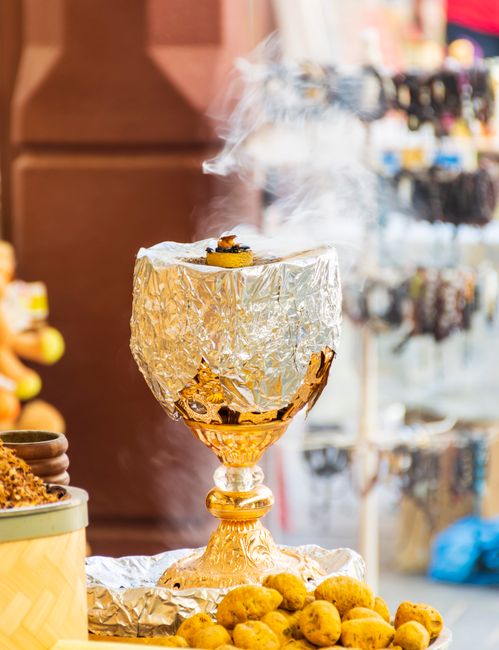
The use of bakhoor is a deliberate and graceful ritual. Small pieces of the fragrant wood are placed on a burning piece of charcoal inside a traditional incense burner called a "Mabkhara." The Mabkhara, often made of beautifully carved wood or decorative ceramic, is then carried around the home. The smoke is wafted onto curtains, cushions, and in the corners of rooms to infuse the entire space with its fragrance.
UNESCO added the Majlis to its Representative List of Intangible Cultural Heritage of Humanity in 2015, recognizing the cultural weight of these gathering spaces and the traditions they carry. Incorporating bakhoor into a dining room or sitting space before guests arrive mirrors this time-honored gesture of generosity.
The Mabkhara: Choosing Your Burner
Whether you are in Dubai, Sharjah, or ordering for delivery anywhere in the world, the vessel you burn incense in matters both practically and aesthetically. In Gulf homes, burning bakhoor before guests arrive signals proper hospitality. The ritual itself, preparing the mabkhara, lighting charcoal, and placing bakhoor, creates intentional moments.
For modern homes, two formats work well alongside traditional options:
-
Electric burners: Clean, controlled, no charcoal needed. Ideal for smaller spaces like bedrooms and home offices.
-
Traditional charcoal mabkhara: Produces the most complex, layered fragrance. Best for living areas and larger rooms.
-
Premium incense sticks: The most accessible format for daily use. Incense sticks are the most common format. They burn slowly at 30-60 minutes per stick, release a consistent stream of smoke, and are easy to control. Best for daily use and larger rooms.
How to Match Middle Eastern Incense to Every Room
Room-by-Room Scent Strategy
I have found that the single biggest mistake beginners make is using the same heavy oud blend in every room. The results are overwhelming rather than welcoming. The key is matching intensity to space. When choosing Middle Eastern incense, one of the best tips is to think about where it is going to be used. Not all spaces are created equal when it comes to scent.
Small spaces like bathrooms closets, and home offices call for lighter scents. Soft bakhoor or lightly perfumed frankincense works better here. These will not overpower the space or stick to fabrics and clothes. Short burning sessions of about 5 to 10 minutes keep things fresh without going overboard.
Medium rooms such as bedrooms and dining rooms offer more variety. A balanced oud or mid-range bakhoor gives depth without feeling too heavy. Notes like sandalwood or rose provide something smooth. Burn incense about 15 to 20 minutes before using the room.
For large living areas and majlis-style entertainment spaces, oud-forward bakhoor burns on charcoal deliver the most impressive and lasting results, the scent can linger for several hours after burning.
Scent as a Gifting Language
The associations of bakhoor have always existed in Arabian culture, dominating homes, majlis events, parties, and other special events with its dense and luxurious scents. Bakhoor is hospitality, tradition, elegance, and a strong identification with Middle Eastern heritage.
For gifting in Dubai, Abu Dhabi, and Sharjah, a curated bakhoor or oud incense gift set carries cultural resonance and luxurious presentation that no generic candle set can match. Premium brands like Oud Saray offer authentic UAE-inspired incense sticks that bring together bakhoor, oud, and frankincense traditions in formats that work for both daily home use and high-end gifting. You can order online for delivery across Dubai and Abu Dhabi, or find their products stocked in select partner stores and luxury spas across Sharjah and the wider UAE.
Pro Tip: The traditional Middle Eastern bakhoor is often passed among guests so they can imbue the lingering fragrance into their hair, clothes, and hands. At your next gathering, pass a burning mabkhara among guests before sitting down to eat. The gesture will be remembered long after the evening ends.
Common Mistakes to Avoid When Using Middle Eastern Incense
Using Too Much, Too Fast
Beginners often burn large quantities of heavy bakhoor in a small room and find the experience overwhelming. Aromas, when paired with a specific, repeated physical ritual, are a somatic signal to the brain and body that something is about to shift. The goal is to calibrate, not saturate. Start with small amounts, a pinkie-tip-sized piece of bakhoor is sufficient for most rooms. Build up gradually over several sessions to identify your preferred intensity level.
Skipping Ventilation
Always burn incense in a well-ventilated room to avoid a buildup of smoke. Open a window or door to allow fresh air to circulate. Adequate ventilation is especially important for resin-based incense and charcoal-burned bakhoor, which produce more smoke than stick formats.
Choosing Synthetic Over Natural
Consumers are increasingly shifting towards natural and herbal incense made from organic ingredients such as sandalwood, resins, essential oils, and flowers. The scientific benefits documented for oud and frankincense apply to natural compounds, not synthetic imitations. When buying incense sticks online or in stores across the UAE, check the ingredient list carefully and prioritize products with declared natural ingredients.
Overlooking Sustainability
Sustainability concerns are reshaping raw material sourcing, as Aquilaria species face over-harvesting pressures, prompting increased investment in sustainable agarwood plantations and biotechnology-driven synthetic oud alternatives. Support brands that source responsibly and can demonstrate their supply chain provenance.
If you're new to burning bakhoor, this walkthrough covers the basic setup, coal, burner, and proper technique, so you can avoid the most common beginner errors.
The Global Trend: Where Middle Eastern Incense Is Heading
While bakhoor remains embedded in Middle Eastern culture, its popularity has soared internationally, captivating fragrance connoisseurs and wellness seekers in Europe, North America, and Asia. This is being driven by a broader cultural shift in how Western consumers relate to home fragrance. Studies on global air-care trends show that about two-thirds of consumers prefer home air-care products that smell as natural as possible, while nearly half favor natural household fresheners over synthetic alternatives.
The market is witnessing a significant transformation in 2025-2026, as mainstream global fragrance houses increasingly incorporate oud as a hero ingredient, blending it with Western accords such as florals, woods, and musks to create crossover products that appeal to audiences far beyond the traditional GCC markets. Consumers in North America and Europe are discovering oud through niche and prestige fragrance brands, influencer-led social media campaigns, and the growing appetite for multicultural, exploratory scent experiences.
Demand for oud in luxury perfumery has surged about 35% in the past five years, pulled mainly by Middle Eastern and East Asian markets, though Western appetite is closing the gap. If you wait until oud and bakhoor are ubiquitous in every mainstream store, the premium experience and authentic sourcing options available today may already be diluted. The time to explore is now.

Frequently Asked Questions
What is the difference between bakhoor and regular incense sticks?
Bakhoor refers to small, scented wood chips, traditionally agarwood (oud), that have been soaked or blended with fragrant oils, resins, and other natural ingredients, then burned over hot charcoal to release a rich, aromatic smoke. The word itself comes from the Arabic bakhar, meaning "to fumigate" or "to perfume with smoke." Regular incense sticks are pre-formed and self-burning, which makes them easier for beginners. Bakhoor requires a heat source (charcoal or an electric burner) and produces a richer, more complex fragrance.
Is Middle Eastern incense safe to burn indoors?
Yes, when used responsibly. Burn incense in a well-ventilated room to avoid a buildup of smoke, open a window or door to allow fresh air to circulate, and never leave burning incense unattended. Natural, high-quality incense products free from synthetic fillers carry fewer irritants than mass-market alternatives. If you have asthma or respiratory sensitivities, start with very small amounts and monitor your response.
How long does Middle Eastern incense fragrance last in a room?
This depends on the format and the size of the space. Standard incense sticks burn slowly for 30-60 minutes per stick and release a consistent stream of smoke. Bakhoor burned on charcoal, however, produces a scent that can linger in soft furnishings such as cushions, curtains, and upholstery for several hours after the burn ends, sometimes even into the following day.
Where can I buy authentic Middle Eastern incense in the UAE?
Authentic options are available from premium online retailers delivering to Dubai, Abu Dhabi, and Sharjah, as well as in-store at select partner outlets including luxury spas and floral gift boutiques. Oud Saray offers a curated range of UAE-inspired incense sticks and bakhoor products rooted in authentic Emirati fragrance culture, available for online order with delivery across the UAE. In the UAE, bakhoor is used daily in homes, offices, mosques, and even inside cars, genuine retailers are not difficult to find once you know what to look for.
Can I use Middle Eastern incense as a gift?
Aesthetic packaging and luxury presentation make incense a compelling gift item and a statement piece in its own right. In Emirati and wider Gulf culture, fragrance has always been a meaningful gift, perfumes and fragrances especially bakhoor, are believed to have been gifted regularly to Prophet Muhammad and his companions. The Prophet of God once said that his most likable gift was oud perfume. A thoughtfully assembled oud or bakhoor gift set signals taste, cultural appreciation, and genuine generosity.
Final Word: A Simple Ritual Worth Adopting
After years of exploring home fragrance from around the world, I keep coming back to the same conclusion: no tradition makes the case for scent as clearly, or as beautifully, as the Middle Eastern approach. The ritual is accessible, the ingredients are backed by both millennia of cultural use and growing scientific evidence, and the experience is one that genuinely transforms a room. Start with a high-quality incense stick. Build toward bakhoor. Explore frankincense for your wellness practice. You will quickly understand why this tradition has endured for more than 5,000 years, and why it belongs in every modern home.
Sources
-
Incense in Middle Eastern Culture: Bakhoor and Oud Rituals, Inner Incense. Overview of bakhoor and oud history and cultural significance. Incense in Middle Eastern Culture: Bakhoor and Oud Rituals
-
The History of Room Fragrance in the Middle East, Ajmal. Historical overview of Arabian perfumery and bakhoor. https://ajmal-en-ae.codilar.in/blogs/history-of-room-fragrance-in-the-middle-east.html
-
All About Arabic Incense, Dukhni. Guide to bakhoor types, cultural uses, and hospitality traditions. https://dukhni.us/blogs/all-about-arabic-incense
-
The Rise of Bakhoor in the Middle East, Nuarai. Cultural resurgence and global popularity of bakhoor. https://nuarai.com/blogs/news/bakhoor-middle-east
-
Global Incense Market Outlook, 2030, Research and Markets. Market sizing, growth forecast, and consumer trends. https://www.researchandmarkets.com/report/incense-market
-
Incense Market Forecast 2025-2035, Business Research Insights. Market data, consumer wellness trends, and regional analysis. Incense Market Trends 2026-2035
-
Agarwood Essential Oil Market Size and Forecast, Persistence Market Research. Global agarwood market data, CAGR, and demand drivers. https://www.persistencemarketresearch.com/market-research/agarwood-essential-oil-market.asp
-
Agarwood and Oud: The Most Expensive Wood in Perfumery, Premiere Peau. Market valuation, rarity, and sustainability of agarwood. https://premierepeau.com/blogs/news/agarwood-the-100-000-kg-tree-poached-to-extinction-premiere-peau
-
Aromatics and Incense for Mental Health Support, Northwest School of Aromatic Medicine. Neurotransmitter modulation and aromatherapy benefits. https://aromaticmedicineschool.com/aromatics-and-incense-for-mental-health-support/
-
Science Behind Aromatherapy: How Incense Transforms Your Mind, HEM Fragrances. Cortisol reduction and aromatherapy research. https://hemfragrances.com/blogs/blogs/the-science-behind-aromatherapy-how-incense-transforms-your-mind-and-space
-
Frankincense: Phytochemistry, Bioactivity, and Future Directions, ScienceDirect. Systematic review of frankincense biological effects. Frankincense Unveiled: Phytochemistry, Bioactivity, and Future Directions
-
Frankincense, Boswellia, PMC/NCBI. Pharmacological overview of frankincense in treating inflammatory diseases. Frankincense, the resinous extract
-
Hollings Researchers Find Boswellia Shows Anti-Cancer Activity, MUSC Hollings Cancer Center. Clinical trial findings on frankincense and breast cancer. https://hollingscancercenter.musc.edu/news/archive/2024/01/11/hollings-researchers-boswellia-frankincense-shows-anti-cancer-activity-in-small-trial
-
Oud Perfume Market Research Report 2034, Marketintelo. Oud market segmentation, Western adoption, and sustainability trends. Oud Perfume Market Research Report 2034
-
The Meaning Behind the Fragrance: A Guide to Emirati Bakhoor, UAE History and Culture. Mabkhara ritual, hospitality gestures, and bakhoor cultural significance. https://traditions.uaehistoryandculture.com/the-meaning-behind-the-fragrance-a-guide-to-emirati-bakhoor/
-
Bakhoor: The Ancient Scenting Ritual the West Forgot, Premiere Peau. Gulf hospitality context for bakhoor burning. https://premierepeau.com/blogs/news/bakhoor-the-ancient-scenting-ritual-the-west-forgot-pp
-
Home Fragrance Market Size and Share Report, Grand View Research. Consumer preference data for natural fragrances. Studies on global air-care trends
-
Best Arabic Incense for Home: Bakhoor Buying Guide UAE 2026, BazarKom. Room-by-room incense guidance for Gulf contexts. https://www.bazarkom.ae/blogs/news/best-arabic-incense-for-home-complete-bakhoor-buying-guide-uae-2026
-
All You Need to Know About Bakhoor, Samawa Perfumes. Spiritual significance, gifting traditions, and Ramadan context. https://samawa.ae/blogs/all-blogs/all-you-need-to-know-about-bakhoor
-
Cultural Heritage: Hospitality, Majlis, and Traditions of Togetherness, Bayt Magazine. UNESCO Majlis recognition and bakhoor's role in community gatherings. https://baytmagazine.com/cultural-heritage-hospitality-majlis-and-traditions-of-togetherness/